s editors of a magazine with “modern” in its title, we are continually asking ourselves what is or is not modern in 2025, and if and why this word still matters. Looking back to the philosophical underpinnings of Modernism’s first makers, those who were committed to rigorous design that sought to solve problems—spatial, social, environmental, even spiritual—that run far deeper than style, it’s clear the word is much more than a moniker.
The first modernist homes in Europe and North America were built in the 1920s, just over 100 years ago. Leading modern architects like Frank Lloyd Wright, Le Corbusier, Richard Neutra, and Rudolph Schindler were studying how the construction of spaces, particularly those in a home, could directly respond to and affect lived experience: encouraging better physical health, instilling a sense of emotional wellness, emphasizing connectivity to the outdoors, and generating forward-thinking attitudes through the use of unconventional materials and new technologies. The early modernist designs had an aesthetic vitality because they were progressive thought experiments brought to life through carefully drawn lines and expressive materials.
The three to four decades when Modernism was at its height globally—between 1940 and 1970—were high impact, and have left an indelible mark on art, architecture, and design. The early Modernists’ study of function led to simplified forms, aesthetic gestures, and philosophical ideals that are now iconic and still employed by many modernist architects today. Steel framed glass boxes, ribbon windows, flat rooflines, and open floor plans were new and innovative when they were introduced in the 1920s, and are still the standard of what it means to build modern today.
Yet, if Modernism is meant to be a framework that acts in response to how contemporary people live and think, shouldn’t modern architecture look and feel a bit different now than it did at its genesis? Everyday life has changed a great deal since 1922 when Rudolph Schindler designed what is now considered the first modern home in America. How has modern architecture evolved to accommodate changes in lifestyle while remaining itself? Are the old forms still the best forms? What do we hope future generations will have to say and write about mid-21st-century modernism?
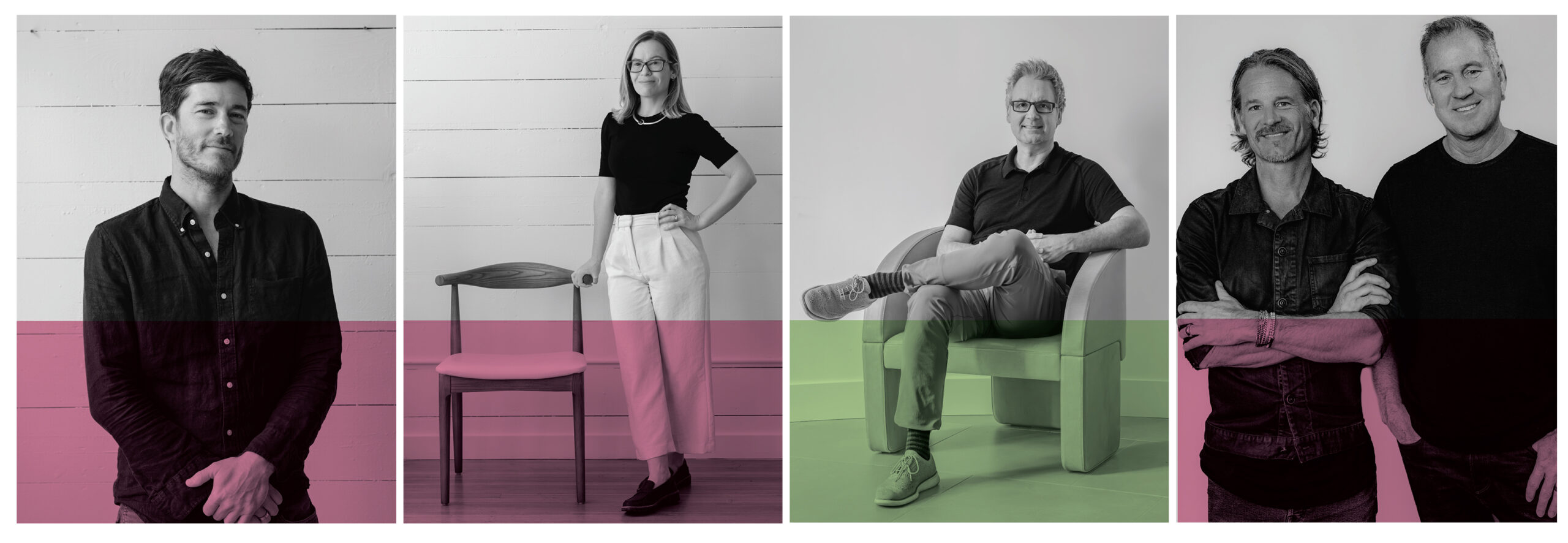
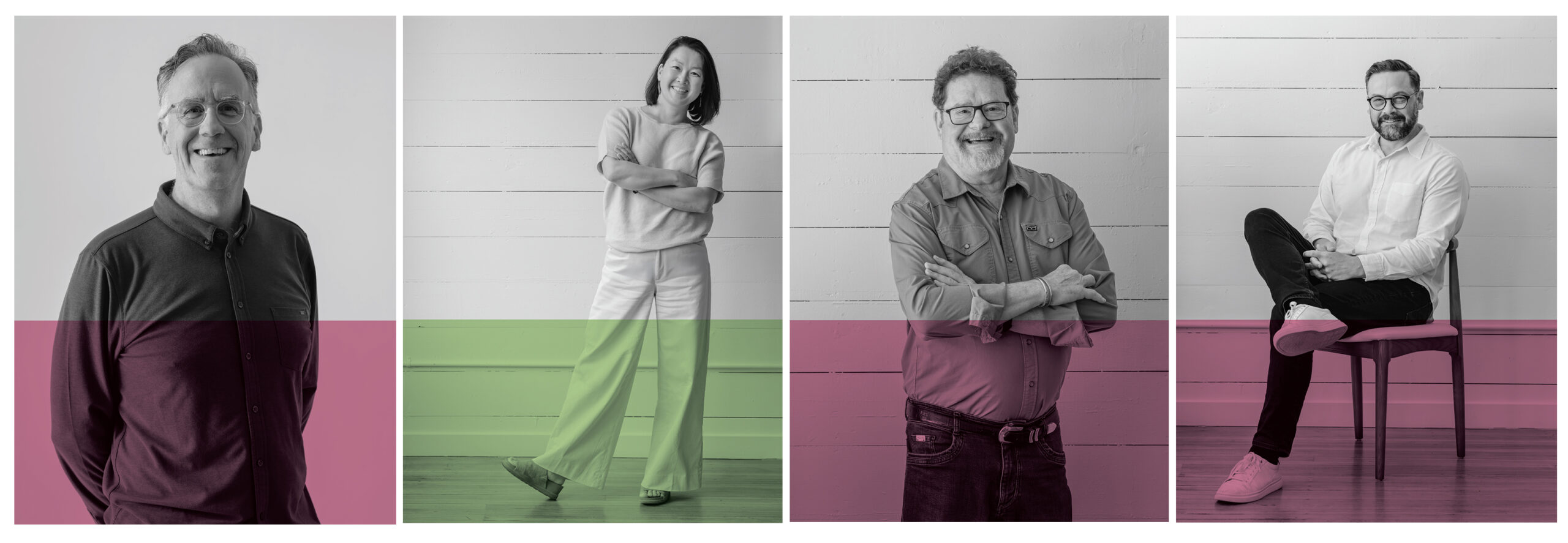
Curious about how today’s leading architecture firms are working with and expanding Modernism’s legacy, we invited nine Colorado architects to respond.
Brad Tomecek: We define modern architecture as an intentional and deeply engaging process to create the most successful experience for our clients through their sites. We hope the term communicates the value we place on forward thinking design approaches and connectivity to the outdoors as a foundation to ensure physical health and emotional wellness among other experiential needs.
Harvey Hine: We try to stay away from labels with our clients. Clients often use the term modern to imply what is new and functional. We are renowned as modern architects because our philosophy is expressed in elements from early 1930s through 1960s modernism, such as large glass walls, flat roofs, and detailing that is minimal in nature. This was in response to a world with too much clutter and materialism. To us, modern means “of our time.”
Kevin Stephenson + Chris Davis: We try to stay away from labels with our clients. Clients often use the term modern to imply what is new and functional. We are renowned as modern architects because our philosophy is expressed in elements from early 1930s through 1960s modernism, such as large glass walls, flat roofs, and detailing that is minimal in nature. This was in response to a world with too much clutter and materialism. To us, modern means “of our time.”
Linnaea Stuart: Our work is defined as artful, resilient architecture that evokes a sense of awe—architecture that is both deeply rooted in its context and open to discovery. To call ourselves modernists is to offer a client the opportunity to look at their own narrative with a fresh lens and distill it down to its most essential verses. Each project is an opportunity to reframe the familiar with fresh eyes. This journey is about setting aside preconceptions and approaching each site, client, and challenge with curiosity. Our modernist approach invites authentic collaboration, rigorous exploration, and a willingness to constantly edit a good idea into something better.
Mike Piché: Modern architecture is about clarity, where a single essential idea quietly guides the design. Each element, at every scale, is carefully considered and thoughtfully executed. Nothing is added without intention. Nothing is omitted without care. The resulting architecture evokes presence, not spectacle. It is timeless and purposeful.
Nicholas Fiore: The original tenets of modernism centered around making a break from societal currents and tradition. It was subversion for subversion’s sake, or making something new. We hold some of these ideas in our hearts when we make buildings today—and yet we acknowledge the pretense of stating them out loud! When employed in early discussions with potential clients, “modern architecture” mainly serves as a very blunt filter, signaling to us that we will be able to work together to find creative solutions for their needs, both in terms of utility and aesthetics. We strive to make something new each time out.
Sarah Harkins: We define modern architecture as an ongoing pursuit of clarity, restraint, and purpose. For us, modernism is about distilling design to its essence: clean lines, honest materials, and a thoughtful relationship between building and site. We hope the term “modern” signals to potential clients our commitment to rigorously detailed work that feels both current and enduring, beautiful and deeply livable.
Tom Gallagher: While we tend to shy away from speaking of our work in terms of style, we often refer to it as “warm modernism,” as we tend to want to enter projects with new clients without a preconceived stylistic outcome, and this term is potentially less limiting. Our work has never been “all-modern, only-modern, all the time,” and we don’t impose it on a project. We instead work hard to make the project function really well.
Linnaea Stuart: Like many historical movements, the early modernists focused on legitimizing their ideas and approach into practice. We might even acknowledge and forgive their over-prioritization of function and philosophy over the needs of true comfort, pleasure, and joy in some cases. Today, modernist principles have softened and deepened, shaped by shifts in how we live, our climate, and the poetics of place. Of course, our work is always negotiating the idealism of the pure idea and the realism of organizing shoes at the front door and storing towels in the bathroom. This tension has always ebbed and flowed in our work, both now and in our modernist past.
Mike Piché: Le Corbusier called the house a “machine for living.” Today, modern architecture has become just that—precise, efficient, intricately engineered. Plans are tighter. Materials are smarter. Forms are distilled to their essence. But beyond the logic, processes, and systems, we search for something else. Spaces that restore, not just perform. These are not just machines, but something that can be beautiful—quietly anchored in place. We work with natural materials, texture, and light. The materials do the talking.
Brad Tomecek: Energy and technology have become more central to the discussion of modernism. Our projects embrace technology, yet we attempt to deemphasize the obvious presence of these responses in our work. Taste, like fads, inherently change, so we strive to implement material solutions that are timeless. Timelessness can be one of the best solutions for sustainability. When projects literally “stand the test of time,” it means longevity and avoiding demolition of a throw away culture mentality.
Sarah Harkins: Clients now seek homes that are not only architecturally refined but also warm. Modernism has responded by becoming more nuanced, more human. It’s no longer just about reduction, but about crafting environments that are resilient, personal, and deeply rooted in their context. In my opinion, this evolution is a successful realization of Richard Neutra’s belief in designing for the whole human being—not just for their physical needs, but also their mental and emotional well-being.
Nicholas Fiore: Principles have hewed closely to historical modern aesthetics in most ways. Modernist aesthetic principles have been somewhat static for a century, but they have been aided by technological advances that have allowed them to be stretched and taken to extremes. Environmental concerns have impacted modern design, yes, but I also see that technological advances have mitigated the need to divert from modern principles. For example, the environmental principle of seeking out energy efficiency would logically lead designers to reduce building sizes and also areas of glass on facades. The development of better glazing systems, with greater efficiency in terms of heating or cooling loss to the exterior, has allowed for modernist principles of indoor/outdoor connection and transparency to continue unabated (so far).
Tom Gallagher: I’m not sure it’s aiming to solve the same social problems as European modernism was trying to solve, such as the failure of traditional architecture to meet modern needs, rapid urbanization, social inequality, and inefficient and wasteful use of materials and labor. But perhaps it is trying to solve, or is a possible solution to, the 21st century’s wave of rapid migration to cities and the need for large-scale multifamily housing construction. On its best face, building on infill sites in urban and multimodal transportation-served locations is a fundamentally “modern” (and positive) urban design tactic. On its more sinister face, it could be nullifying the character of cities by rolling out the same product everywhere.
Harvey Hine: If modernism is defined as using the latest technology, many environmental problems are being addressed. This does not solve climate change, but it is one small part of the solution. Modernism as a style does not solve anything, but it can reflect a way of living.
Linnaea Stuart: A modernist approach, at its best, is a tool for challenging the status quo—a way of thinking that begins by asking “why” and doesn’t stop until we’ve uncovered a clearer, more poetic response. It’s a methodology rooted in purpose and refinement, helping us design with intention in a world that often favors excess. Today, modernism addresses some of our most pressing challenges. It responds to the climate crisis through material reduction, prefabrication, and passive performance strategies that let buildings work in harmony with their environment. Its commitment to the honesty of materials and meticulous detailing stands in quiet defiance of a disposable culture, offering instead a sense of permanence and care. Modernism seeks clarity—solving problems not with more, but with better.
Kevin Stephenson + Chris Davis: The statement we hear from almost every client is a palpable appreciation for their new and improved way of life. Based on this very common and consistent feedback, one could deduce that happiness, mental health, and peace of mind are all notably enhanced by a modernist approach. The tranquility of your own personal oasis is a welcome sanctuary to the outside chaos. In the interest of full transparency, many a client has also admitted to now never wanting to leave their modern homes. Vacations become less enticing, hermit-like and recluse behavior are problems that are also a direct result of embracing a modernist approach.
Mike Piché: A modernist approach helps us tackle real world problems head on: wellness, accessibility, intelligent integration of technology, environmental stewardship, and yes, even respecting the budget. Our work strives for grounded designs attuned to the lived experience. This approach to critical thinking yields architectural solutions that best respond to these challenges and the site or regional context in a manner that is ultimately true to form and function.
Nicholas Fiore: “Ideological pursuit” is a nice-to-have, but not a be-all-end-all. Our studio does not have the luxury of engaging only with clients who come to us matched perfectly to our ideologies. We are a service-oriented business at the end of the day. Style categories are unavoidable when working with the public at large. We feel we can embrace a genre marker like “modern” and make it our own, no matter the project ideology, budget, or constraints. We try to make every project unique in its own way, and to learn a new lesson ourselves.
Kevin Stephenson + Chris Davis: We work very hard to be artful. In our practice, there isn’t a formula to good design, nor does modern architecture need to be sterile or serious. Like art, our architecture hopefully pushes boundaries, evolves beyond the expected, is playful, whimsical at times, and always leans into the “exception to the rule.” Again, context always comes into play, which results in original architecture that is of its place.
Linnaea Stuart: As we define what modern architecture is for us, I am particularly fascinated by the thoughts and comments of architect, Marlon Blackwell, calling us to be “quietly transgressive” in our work. We are not pushing the boundaries for boundaries sake, we are approaching the questions of what is best for this place, for these people, for this time, and letting go of the preconceived notions of what has been done or has always worked before.
Brad Tomecek: Our practice focuses on staying true and open to the forces present on a particular project and site. We take the time to listen and make focused observations on the site and site surroundings. We allow those forces to reveal the form and porosity of a structure without a preconceived idea of what may unfold. We begin to dig deep into program to better understand how a place should respond and feel in this environment while keeping an eye on the future evolution of use. The result we seek is honest and true, not influenced by external forces.
Sarah Harkins: We approach each project from first principles: understanding the site, the client’s needs, and the potential for light, movement, and material expression. Rather than applying a predetermined aesthetic, we let the design emerge through exploration and restraint. We stay rigorous by questioning everything, editing relentlessly, and designing with purpose. The result is work that feels timeless—not because it adheres to a style, but because it’s rooted in clarity, intention, and the specifics of place and program.
Tom Gallagher: We try to promote design discussions that go deep, and get past curated plagiarism. Our teams are strong enough, fast enough, and adept enough at representation software to churn through the chaff and present enough original options so that the right solution becomes apparent to all.
.
Kevin Stephenson + Chris Davis: Courtyards and covered outdoor spaces are still in. Suits and bow ties are out (with all due respect to our most admired and revered source of inspiration, Le Corbusier). However, the black glasses are still dope!! New tenets? This is a great question, how about jellyfish aquariums in every project?!
Tom Gallagher: I can’t say it’s run its course, but thermally-bridging steel framing is not right for our climate. It’s a bit of holy grail to achieve the appearance of “outside to inside structural members” while avoiding the actuality of cold exterior steel bridging to the warm, often humidified, interior. I can’t say we’ve successfully achieved it yet, but it’s become more of a conversation between architect and builder, and occasionally, client. Modern farmhouse: initially an attempt at relating to rural, agrarian structures, needs a refresh, a reboot, or a moratorium.
Linnaea Stuart: One of the ways that has challenged the ideals of modernism at this time is the loss of tactility in our process of ideation and creation as it is processed and mediated through the virtual, digital, and AI world. The basic premise of using hands, to draw, study, or build has run its course, and the age of expediency is, ironically, the result of modernism’s desire to harness the innovations and new technologies of the time. This ever-widening gap in the way that we work and the things that we make often results in a fragmented experience of the spaces we create. As we abandon the tactile practices that our modernist predecessors wholeheartedly embraced and relied on in their work, we might consider an articulated way to reinfuse the practice of hand “making” in our processes.
Nicholas Fiore: Modern architecture can be cold and unwelcoming, almost inhumane. It doesn’t have to be. The use of traditional materials in modern schemes is not new, but it is a recipe that we believe in.
Sarah Harkins: New tenets include a growing appreciation for emotional resonance—spaces that don’t just function well, but feel good to inhabit. Modernism today must evolve with its users, becoming more intuitive, responsive, and quietly soulful.
.
MID: What regional characteristics in Colorado/the Rocky Mountains are particularly beneficial (or challenging) when it comes to making modern architecture?
Brad Tomecek: Regionalism has become a subtle overlay (in a very good way) on initial modernist ideals that take a systematic or one-size-fits-all approach. If we look at the iconic images of West Coast modernism, one begins to realize that single pane glass and jealousy windows do not perform well in our region. The sexy, minimalist details are much harder to accomplish in our climate, given energy regulations. So should we be swimming upstream against these forces for the sake of an image or style, or leaning into the local drivers of climate and efficiency and accept the aesthetic results?
Harvey Hine: If we are talking about thin structures, expanses of glass and flat roofs, our weather and snow loads make this very difficult. This would be a good argument for not trying to push an aesthetic that is not conducive to our environment. However, we have an abundance of sun that can be harnessed to create a wonderful environment, as well as provide passive and active solar energy. We also have a wealth of local stone that can be incorporated into our buildings while blending into our mountain environment.
Sarah Harkins: The drama of the landscape is both a gift and a challenge. Expansive views, strong natural light, and a raw material palette offer incredible opportunities for modern design to connect architecture with its environment. But that same terrain—steep sites, extreme climate, and wildfire risk—demands rigor and sensitivity. Steeply sloped sites, in particular, introduce significant challenges—from complex excavation and earth retention to more robust structural systems—all of which add cost and require early, strategic design thinking.
Mike Piché: There’s a quiet respect for the land that comes with practicing here. We aim to bring nature into the home in a way that feels effortless, allowing light, texture, and silence to shape the experience. We seek to bring the outside in, not to control it, but to live alongside it. Here, the landscape performs its daily theater—shifting light, changing skies. Architecture must leave space for this rhythm, never competing, only complementing.
Brad Tomecek: I hope that critics will see a design language with strong fundamentals that embrace an ever-changing technological world. I would like to think that they will see an attitude of constant refinement and quality that raises the bar while being equitable to the many, not just the few. I would hope that they shun the visual eye candy of object-based architecture and celebrate the places that fully engage the human experience.
Kevin Stephenson + Chris Davis: That we were respectful of “OG” modernism while elevating it—also spinning it a bit, perhaps flipping it too. We hope that our work stands the test of time, that it is celebrated, and fits into the future context of life moving on.
Harvey Hine: In the last twenty years a generation of talented architects refined their skills to produce some excellent buildings. Technology aided in this endeavor making it easier to achieve their goals. I think that history will look kindly on yesterday’s modern architecture. I am not sure about today’s.
Mike Piché: I hope when people look back a hundred years from now, they’ll see that the architecture we are building today still stands, and that our ideas remain clear, thoughtful, and intentional.
Nicholas Fiore: In 100 years, we hope that humans are in fact writing at all. If we are lucky, they acknowledge our effort and find something good in our work. They are likely to discover a time of political and regulatory unrest and indecision, and they’ll find evidence of this in how we built buildings today.
Sarah Harkins: We hope it’s remembered as a time when modern architecture became more human—when design reconnected with place, prioritized livability, and embraced restraint over excess. Our hope is that today’s modern homes are seen as lasting contributions to the built environment: thoughtfully crafted, deeply contextual, and worth preserving. Spaces that generations continue to enjoy and care for—not ones that are torn down and replaced, but maintained and celebrated for their enduring value and quiet beauty.
Tom Gallagher: “The architects of the mid-2000s valiantly struggled against curated plagiarism, Pinterest, and AI, while trying to carry forward modernist principles. They found their answer in honest expression, rigorous compositional iterations, and a mastery of building science.”
Linnaea Stuart: I hope they know that we considered their future when we were designing ours.
.